


Sitting Desk to Standing Desk Commercial Buyer’s Guide
Get Pricing
Sit-stand desks, lockers, workstations and seating — indicative pricing for commercial fitouts in Canberra.
Pricing Catalogue
Quick Answer
Converting from a sitting desk to a standing desk means upgrading to a height-adjustable workstation that lets you alternate between sitting and standing positions throughout the day. For commercial offices, an electric sit-stand desk is the recommended choice — one-touch adjustment means staff actually use the standing function rather than staying fixed in one position. The key decisions are electric vs manual drive, single vs dual motor, and commercial vs residential grade. Grade matters most: a commercial-grade single motor desk will outperform and outlast a cheap dual motor unit from a consumer retailer almost every time.
The search for sitting desk to standing desk covers a wide range of buyers — from facilities managers refurbishing an entire government floor to a business owner upgrading a small team. What they have in common is that they’re ready to make the switch to a more ergonomic solution, but unsure exactly what that involves: what to look for, what to avoid, and how to make sure the desks they buy actually get used.
This guide draws on Aurora Office Furniture’s experience across more than 4,000 commercial fitouts to answer those questions. We’ll cover what “sitting to standing” actually means in product terms, the decisions that matter most, what tends to go wrong, and how to spec correctly for a commercial environment.
If you’re in a hurry, the quick answer box above covers the essentials. If you want to understand the reasoning behind those recommendations, read on.
1. What does converting from a sitting desk to a standing desk actually mean?
A sitting desk to standing desk conversion simply means replacing a fixed-height desk with one that adjusts up and down — typically called a sit stand desk, height-adjustable desk, or standing desk. The desk surface moves between a seated working height (roughly 620–740mm for most adults) and a standing working height (roughly 950–1,275mm), and the user alternates between the two throughout the day.
The mechanism that moves the desk is either electric (motor-driven) or manual (hand crank or gas spring). The vast majority of commercial fitouts in Australia now specify electric, for reasons we’ll cover shortly.
What this isn’t: a standing-only desk, a desk raiser or monitor riser placed on top of an existing desk, or a drafting table. A proper sit-stand desk replaces the fixed desk entirely and provides a full working surface at any height. Aurora supplies the full range of sit-stand workstations — from individual desk frames to bench configurations for shared environments.
Browse Aurora’s full range of sit-stand desks.

2. Electric vs manual sit-stand desk: which is right for a commercial office?
This is the first real decision buyers face, and it’s the one with the most practical consequences.
“Manual desks are usually chosen for reliability rather than price — there are no motors or electronics, so there’s less concern about electrical faults or performance over time. But the catch is usability. Because they take more effort to raise and lower, they’re rarely adjusted day to day. In a lot of cases they end up being used as fixed desks.”
— Dean, Managing Director · Aurora Office Furniture
That observation — that manual desks tend to become fixed desks — is the central usability problem. An electric desk with memory presets lets a user switch between sitting and standing in three seconds with a single button press. A manual crank desk requires stopping what you’re doing, turning the handle 20–40 times, and waiting. The physical friction is small; the psychological friction is enough to kill the habit.
Research on sit-stand desk usage in commercial offices consistently finds that adjustment frequency drops sharply when the mechanism requires physical effort. In practice, Aurora’s installation team sees electric desks adjusted multiple times daily and manual desks adjusted once a week — or not at all.
For a commercial office, this is the core argument for electric: the benefit of a sit-stand desk is realised only if people actually use the standing function. Electric desks make that realistic. Manual desks, in most office environments, don’t.
For a detailed breakdown, see Aurora’s electric vs manual sit-stand desk buying guide.
3. Commercial-grade vs residential-grade: the decision that matters most
⚠️ The most common and most expensive mistake Aurora sees is buyers fitting commercial offices with residential-grade sit-stand desks purchased online or from consumer retailers. Grade matters more than motor count. A commercial-grade single motor desk will outperform and outlast a cheap dual motor unit every time in a real office environment.
The distinction between commercial-grade and residential-grade sit stand desks is not a marketing label — it reflects genuine differences in how the product is built and what it’s designed to do.
A residential sit-stand desk is typically designed for one user in a home office environment, adjusted occasionally, under a relatively light load. The motor is rated for perhaps 10,000–20,000 cycles over its life. The frame tolerances are looser. The warranty is usually 12 months.
A commercial-grade desk is designed for daily use in an office environment — potentially by multiple users across hot-desking, adjusted many times per day, under heavier and more varied loads. Commercial motors are rated for 40,000–50,000+ cycles. The column construction is tighter, reducing wobble under load. Warranties run 5–10 years on the frame.
When a residential desk is installed in a commercial environment and used at commercial intensity, the wear curve accelerates sharply. What looked like a cost saving at purchase tends to result in early replacement and the disruption of a mid-fitout swap.
The practical upshot: if you’re buying sit-stand desks for a business, government department, school or fitout project — buy commercial grade. It costs more upfront and significantly less over the life of the product.

4. Single motor vs dual motor: when does it actually matter?
Once you’ve established you want electric and commercial-grade, the next question is single versus dual motor. The answer is more nuanced than most product pages suggest.
For a standard individual workstation — a 1,200–1,600mm wide desktop carrying one or two monitors, a laptop and standard peripherals — a quality commercial single motor desk handles the task comfortably. The load is within spec, adjustment is smooth and reliable, and the lifetime cost is lower.
Dual motor becomes worth the upgrade in three specific scenarios:
- The desktop is wide or heavy. Configurations above 1,800mm wide, or desks carrying multiple large monitors, heavy monitor arms and accessories, benefit from dual motor drive. The lift is distributed more evenly, reducing strain on the frame at extended heights.
- Adjustment frequency is high. Shared desks, hot-desking environments and call centres may see six to eight height adjustments per day. Dual motor frames are built for higher cycle rates and perform more reliably under sustained use.
- Stability at full height matters. Wobble at maximum extension is a real issue with heavier setups. Dual motor frames are inherently more stable under load because the lift mechanism is balanced across both uprights.
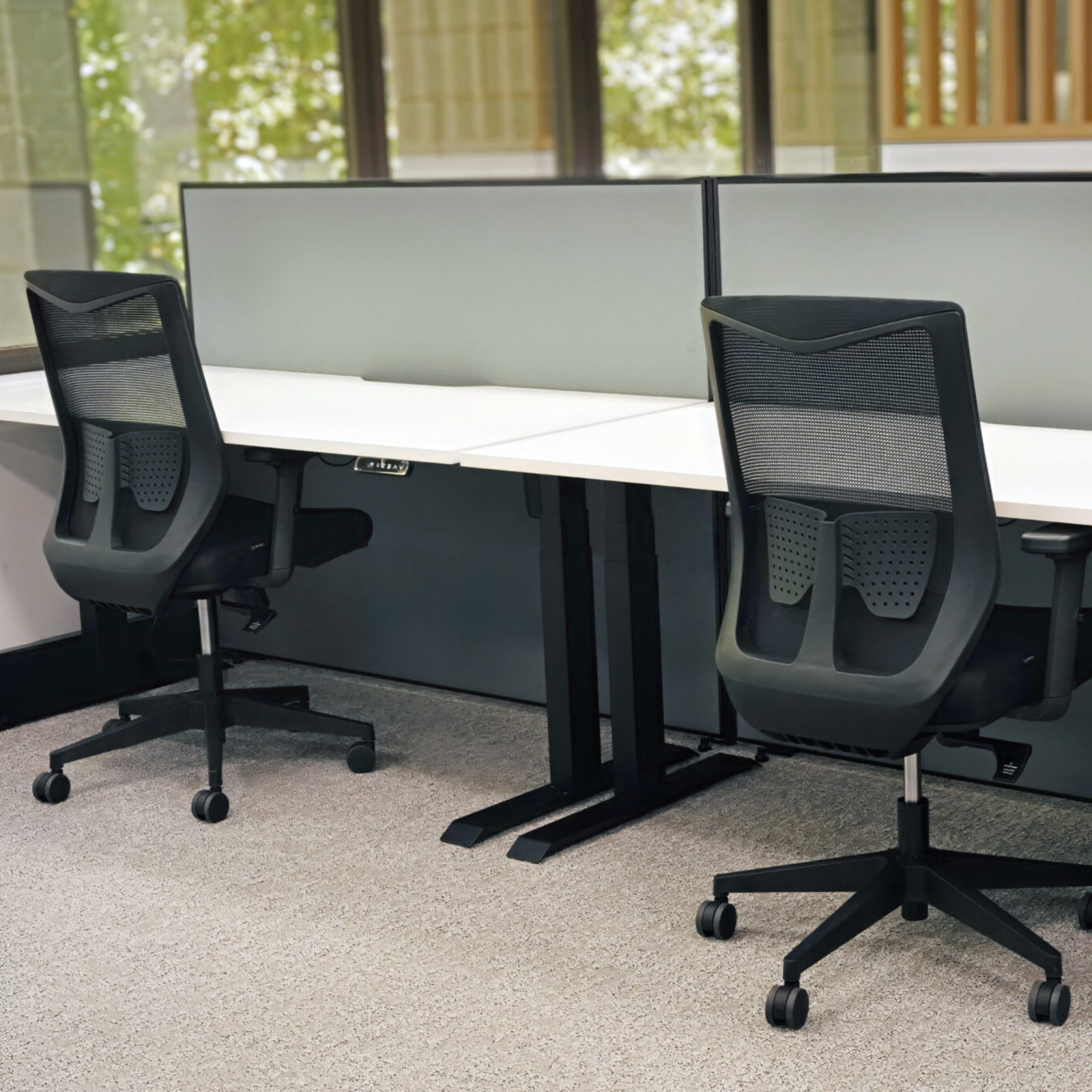
The Aurora Zuri Standard Sit-Stand Desk is a reliable commercial single motor option for most standard office configurations. The Zuri Plus and Ultra ranges step up to dual motor for heavier applications and are widely used across government and corporate fitouts in Canberra, Sydney and Melbourne.
5. What to look for when choosing a sitting desk to standing desk conversion
Beyond the motor decision, these are the specification points that determine whether a sit-stand desk works well in a commercial environment over the long term.
Height range
Most quality commercial sit-stand desks adjust from approximately 620mm (low seated position) to 1,275mm (standing position for taller users). Confirm the range covers your team before speccing — if you have very tall staff, check the maximum height specifically.
Lift capacity
The rated capacity needs to exceed the weight of your full setup: desktop, monitors, arms, docking station and accessories. Single motor commercial desks are typically rated at 80–100kg. Dual motor models often rate at 120–180kg. Add up your load and check the spec.
Ergonomic features
Quality commercial sit-stand desks include memory presets (allowing individual users to save their preferred sit and stand heights), anti-collision detection (stopping the desk if it encounters an obstruction), soft-start and soft-stop, and quiet operation. These aren’t optional extras — they’re what makes the desk usable in a shared office environment. For a detailed look at ergonomic specifications, see Aurora’s guide to ergonomic sit-stand desk features.
Cable management
This is the most commonly underestimated aspect of a sit-stand desk conversion, and the one Aurora’s team most often has to address after installation when it wasn’t planned upfront.
A desk that moves vertically changes the cable management requirements entirely. Cables can’t run straight to the floor — they need to travel with the desk surface as it rises and falls, neatly, without snagging or pulling. Integrated cable trays, spine-mounted cable routes and under-desk power modules need to be specified at the same time as the desk, not retrofitted. Getting it wrong results in a tangle that looks unprofessional and creates real WHS risks.
See Aurora’s guide to sit-stand desk cable management.
Warranty
A commercial-grade sit-stand desk should carry a minimum 5-year warranty on the frame and motor. Ten-year frame warranties are available on premium product. Short warranties (1–2 years) are a reliable signal that the product is not built for commercial application.
6. Real commercial sit-stand desk projects: what Aurora has delivered
Understanding how sit-stand desks work in theory is useful. Seeing how they’re specified and installed in real commercial environments is more useful.
St John Ambulance, Barton ACT
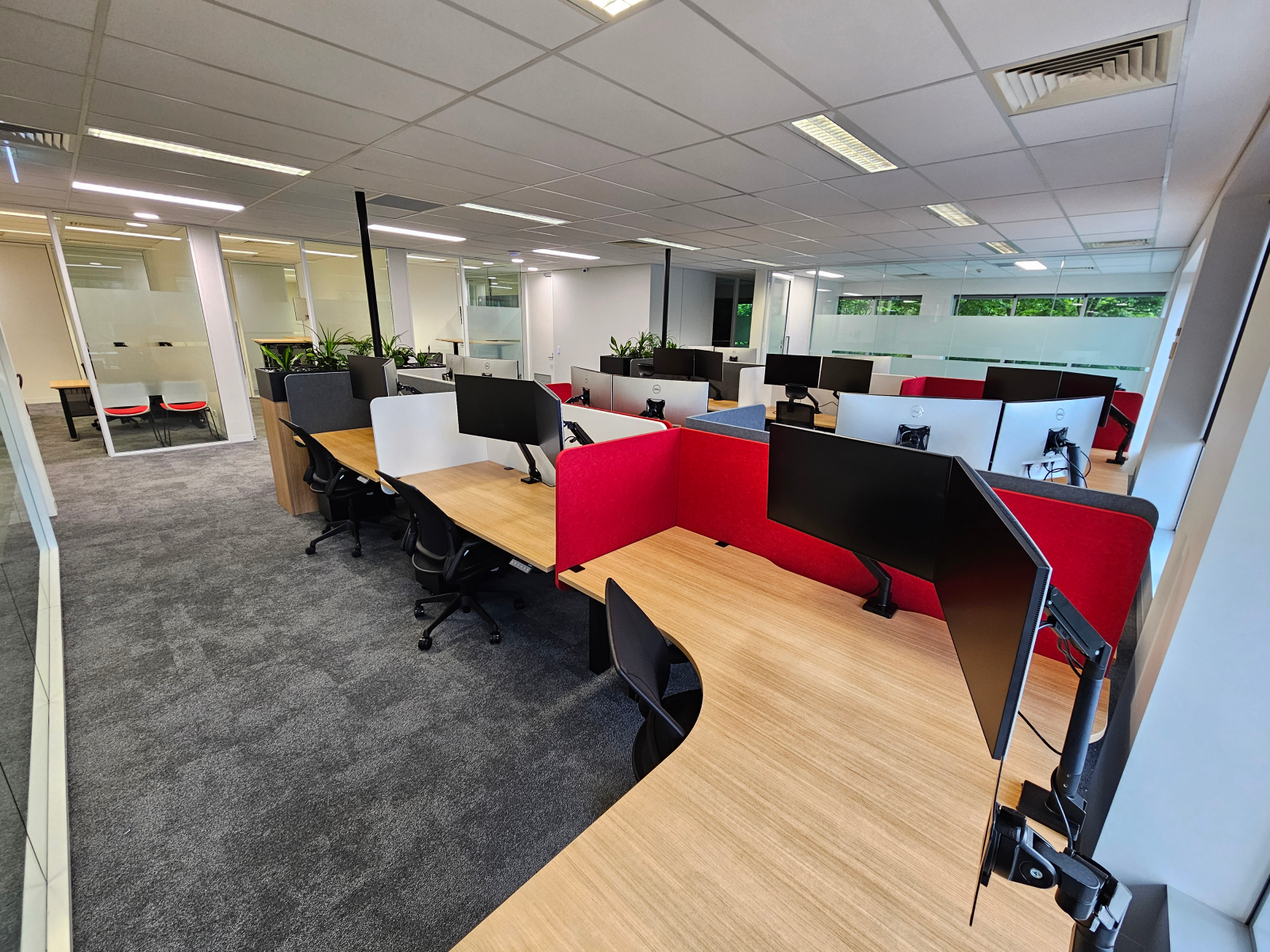
Aurora delivered a full furniture fitout for St John Ambulance’s new 400m² Barton office, including Zuri Plus Sit-Stand Corner and Rectangle Desks and Electric Back-to-Back Sit-Stand Workstations across 32 workstations. Softwiring, integrated power and cable management were coordinated as part of the specification — not retrofitted.
Project value: $117,000 + GST.
View the St John Ambulance project →
Canberra Girls Grammar School, ACT
Aurora supplied and installed Ultra Sit-Stand Desks in Rectangle and Corner configurations, along with Artia Back-to-Back Workstations, Euro Acoustic Screens, cable management and integrated power across administration and education spaces at Canberra Girls Grammar School.
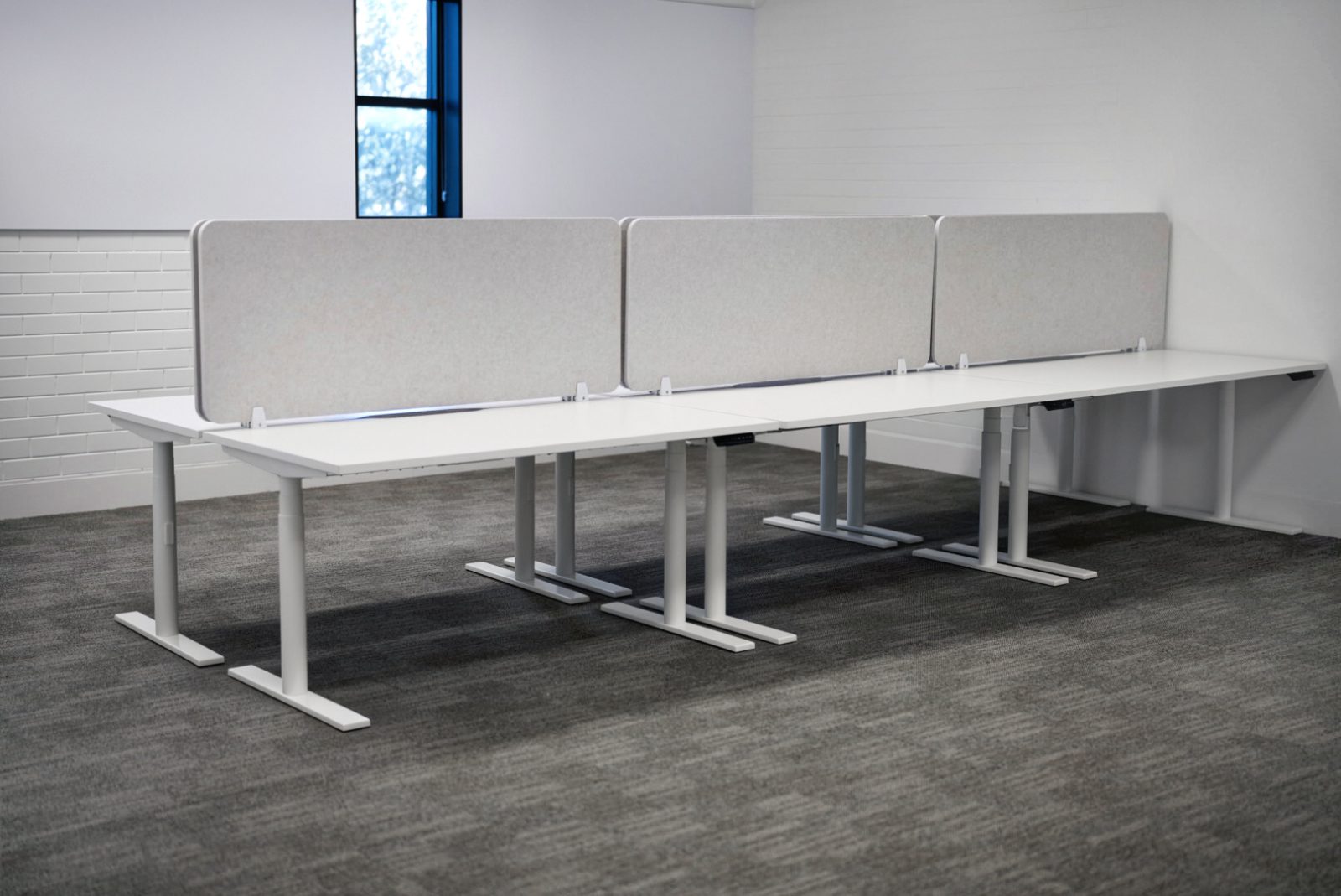
Project value: $65,000 + GST.
View the school furniture project →
Both projects share a pattern that runs across Aurora’s commercial fitout work: sit-stand desks are specified as part of a complete workstation solution — not purchased in isolation. Cable management, power integration, ergonomic seating and acoustic screening are coordinated together, because the desk only delivers its full value when the environment around it is also considered.
7. How Aurora approaches a sitting desk to standing desk conversion
Most buyers who contact Aurora don’t arrive with a fully specified product list. They arrive with a problem: an existing fixed-desk environment that needs to change, a team that’s asking for sit-stand options, a fitout project that includes workstations, or a replacement cycle that’s overdue.
Our approach is consultative rather than transactional. That means:
- A conversation about your space, team size and how the desks will actually be used — before recommending product.
- A 3D space plan for larger projects, so you can see exactly how the configuration will look before anything is ordered.
- Specification of cable management, power and accessories at the same time as the desk — not as an afterthought.
- In-house delivery and installation teams in Canberra, Sydney and Melbourne — Aurora’s own people install the product.
- Ongoing support and warranty service over the life of the product.
Browse our full range of sit stand desks or get in touch to discuss your project.
Frequently Asked Questions
What is a sitting desk to standing desk conversion?
How much does a commercial sit-stand desk cost in Australia?
Is an electric or manual sit-stand desk better for an office?
What should I look for when converting to a sit-stand desk?
Do I need a single or dual motor sit-stand desk?
Does cable management need to be planned before installation?
Does Aurora deliver and install sit-stand desks across Australia?
What warranty do Aurora’s sit-stand desks carry?
Ready to upgrade your workplace to sit-stand desks?
Aurora has supplied and installed sit-stand desks across 4,000+ commercial fitouts — government, education, corporate and healthcare. Tell us about your project and we’ll spec the right solution.
Featured posts
View all posts





Get Our Pricing Catalogue
